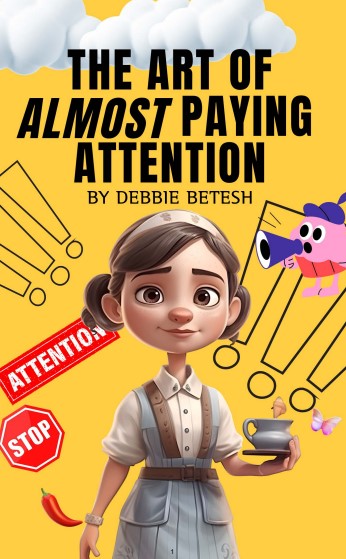
Meet Mia Parker, a bright, funny, and imaginative girl whose mind seems to move faster than everything around her. She enjoys her friends, lunch, art, and even science, especially when things explode safely. But staying focused in school is another story.
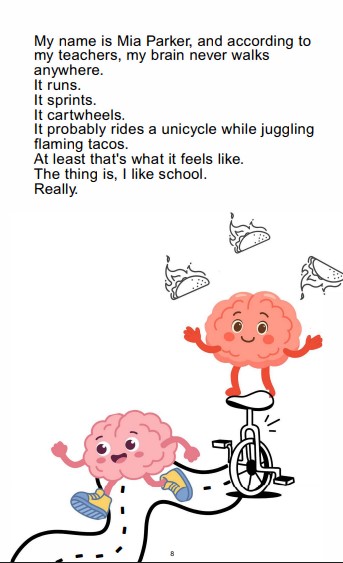
While the teacher is speaking, Mia’s attention can suddenly land on the clock, the pencil sharpener, a bird outside, or a strange mark on the ceiling. It is not that she does not want to pay attention. Her brain simply notices everything, all at once.
With humor, honesty, and colorful illustrations, The Art of Almost Paying Attention explores what it feels like to move through school with a mind that refuses to slow down. Along the way, Mia finds support in Ms. Riley, the school guidance counselor who always seems to understand when Mia is having a difficult day.
This story is for every child who has ever felt distracted, misunderstood, different, or unsure of themselves. It is also for the parents, teachers, counselors, and grown-ups helping children understand that a busy brain is not a broken brain.
What if she is not ignoring the world, but noticing too much of it?
Mia knows she is expected to listen, remember her water bottle, keep track of her lunch, follow directions, and somehow stop her thoughts from racing in twelve different directions.
She tries. She really does.
But when your mind is filled with questions, ideas, sounds, pictures, worries, and garlic knots, even an ordinary school day can feel like an enormous adventure.
Through Mia’s experiences, young readers are reminded that struggling to focus does not make them lazy, careless, or incapable. Sometimes they simply need patience, encouragement, and tools that work for the way their minds operate.
The Art of Almost Paying Attention celebrates self-understanding, resilience, and the people who take the time to see beyond a child’s struggles. It gives children a character they can recognize, laugh with, and root for, while opening the door to meaningful conversations between children and grown-ups.
Because Mia does not need someone else to decide what she can become. She needs someone to believe in her while she learns to believe in herself.